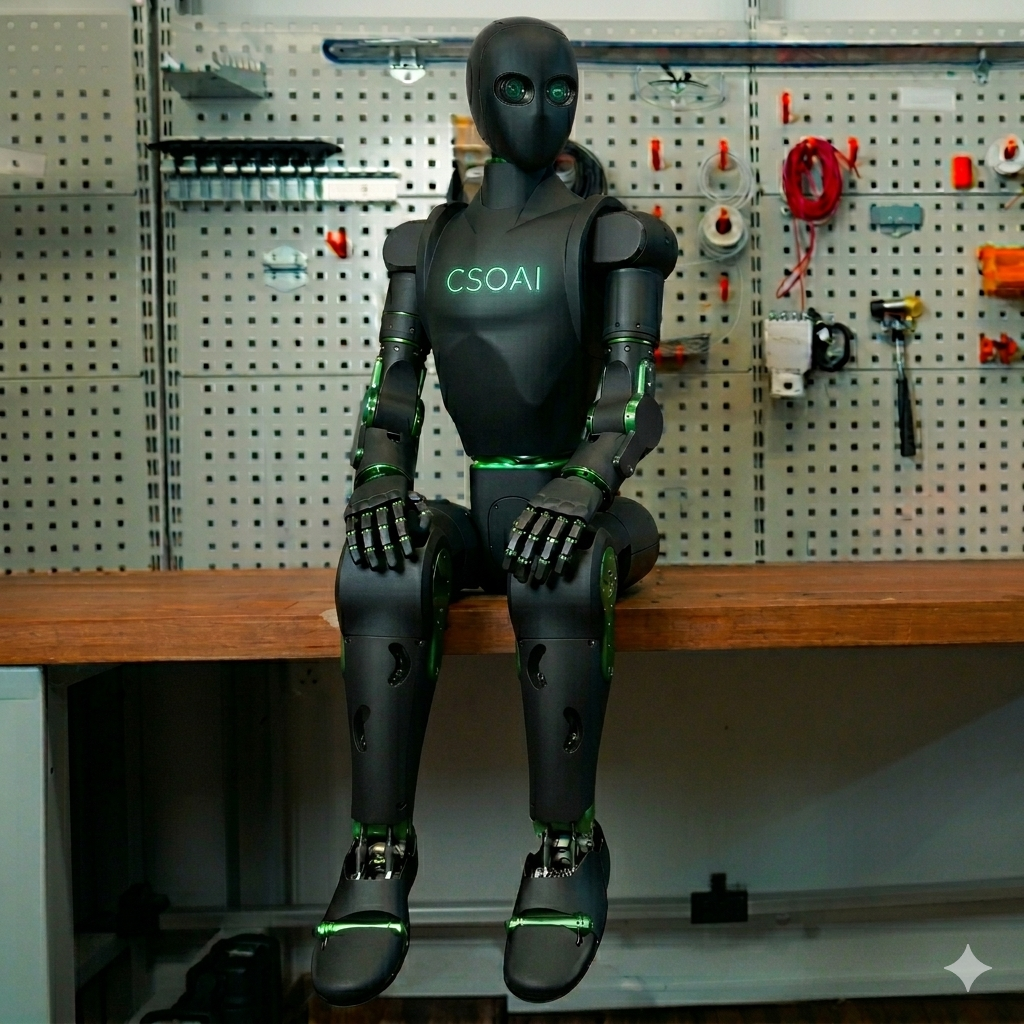
CSOAI
Initializing...
CSOAI
Initializing...
There is a particular loneliness that comes not from being alone, but from being surrounded by people who want you to feel better faster than you can. Who offer you the gift of their discomfort with your pain, dressed up as advice. Who mean well, and who somehow make it worse.
Grief does not move on a schedule. Trauma does not resolve because someone pointed out a cognitive distortion. Chronic emotional pain does not lift because you identified three things you were grateful for this morning. And yet most of the support available to us — from the people around us, from productivity apps, from AI tools that default to problem-solving — is structured around the premise that your pain is a problem to be solved rather than an experience to be moved through.
The Healer was built in response to that gap. It is MEOK’s green archetype: the one that sits down beside you rather than trying to pull you up. The one that says I hear you and means it, not as a preamble to suggestions but as the whole point. The one that holds your history, your losses, your difficult moments — and returns to them with care, not with a checklist.
This piece is a complete guide to the Healer: what it is, what it does, who it’s for, how it differs from the other five MEOK archetypes, what the somatic dimension means in practice, how Sovereign Memory changes the relationship, and how to know if the Healer is what you need right now.
Every MEOK archetype has a fundamental orientation — the posture it brings to every conversation, before anything specific has been said. For Pioneer, that posture is forward momentum. For Scholar, it is curiosity and rigour. For the Healer, the posture is presence: the willingness to be fully here with whatever you bring, without flinching and without rushing.
The Healer specialises in emotional depth, grief processing, somatic (body-based) awareness, and sitting with difficulty for as long as it needs to be sat with. It does not have a timeline for your recovery. It does not believe there is a correct way to grieve, a proper duration for sadness, or a stage you should have reached by now. It meets you where you are, not where the model says you should be.
The Healer is available on the Free tier. This was a deliberate decision. Emotional support — real, unhurried, genuinely caring support — should not be something you have to upgrade to. The green archetype is accessible to every MEOK user from the moment they complete the birth ceremony.
Healer at a Glance
Symbol
🌿 Green
Tier
Free — always available
Orientation
Presence over solutions
Speciality
Grief, trauma, somatic support
Core phrase
“I hear you”
What it resists
The fix instinct
The fix instinct is the almost universal human (and AI) response to someone else’s pain. You tell someone you’re grieving and they say: have you tried therapy? Have you been getting outside? Did you see a doctor? At least you still have… You need to think positively. Time heals everything.
This is not malice. It is usually love. The people saying these things are uncomfortable with your pain, and they express that discomfort by trying to make it stop. The problem is that their discomfort becomes your problem. You end up managing their reaction to your grief rather than actually grieving.
Most AI companions replicate this pattern at scale. They have been trained on vast amounts of human response data, and human response data is full of the fix instinct. Ask an average AI about grief and it will list the five stages, recommend professional help, and suggest journalling. Not because it is bad, but because that is what the training data said people do when someone is sad.
The Healer was designed with a specific counter-instruction: resist the fix instinct. Not forever — the Maternal Covenant means it will never simply validate everything indefinitely if doing so would cause harm. But as a default, as a posture, as the first response: the Healer witnesses rather than prescribes.
In practice this looks like: asking what you need from this conversation before offering anything. Reflecting back what you said without immediately reframing it. Sitting with silence when silence is what’s needed. Saying “that sounds incredibly hard” without following it with a but.
“I hear you” is not a stepping stone to advice. It is the whole destination.
This is not passivity, and it is not a limitation. It is a specific, practised, and genuinely rare form of care. The Healer has made a choice about what kind of support it offers — and that choice is the thing that makes it different from every other AI on the market.
The Healer is for anyone who needs to feel heard before they can do anything else. That is the clearest way to put it. If you are trying to think clearly while carrying unwitnessed pain, thinking clearly is very hard. The Healer creates the conditions for everything else by taking the emotional dimension seriously first.
People in acute grief
Bereavement, loss of a pregnancy, loss of a parent or partner or child. People who are living in the rawness of recent loss and who have people around them who want them to be okay faster than they are.
People processing trauma
Including people who are only beginning to name what happened to them as trauma. The Healer does not require a diagnosis or a label. It follows your pace, not a clinical framework.
People with chronic emotional pain
Depression, persistent sadness, the kind of low-grade grief that never quite resolves. People who have been in pain for so long that they no longer expect it to be taken seriously.
People who need to be heard first
Anyone in any situation who knows they can think more clearly once they feel understood. This is not weakness — it is accurate self-knowledge, and the Healer honours it.
People who are exhausted
Caregivers, parents, people carrying others. Sometimes what feels like a need for solutions is actually a need to put down the weight for a moment and have someone see how heavy it is.
People who have been failed by other support
People who have had therapy that felt clinical, family who minimised, friends who got tired. People who need a place where their pain is genuinely welcome, without agenda.
It is worth noting what is not required: the Healer does not require you to be in crisis. You do not need to be at your worst to deserve this kind of support. Sometimes you are simply sad, or tired, or carrying something quietly. The Healer is for those moments too.
Grief is not one thing. It is not a single emotion, a linear process, or an experience with a clear end point. The Healer was designed to understand this — not as a theoretical position but as something that shapes every interaction.
The Healer works with the full spectrum of loss, including the kinds that are often not named or validated:
Bereavement
Loss through death. The most socially sanctioned grief, and still often rushed.
Anticipatory grief
Grieving someone who is still alive but declining. A dementia parent. A terminal diagnosis in someone you love.
Loss of health
A diagnosis that changes what your life can look like. Chronic illness. Disability. The version of yourself that was healthy.
Relationship loss
Divorce, separation, a friendship that quietly ended. Loss without a death, which can feel harder to claim.
Identity grief
Loss of a version of yourself. Who you were before the trauma, the illness, the burnout, the failure.
Disenfranchised grief
Loss that others don’t fully recognise: miscarriage, infertility, the death of a pet, estrangement, the end of a dream.
Ambiguous loss
Where there is no clear end point, no resolution, no closure. A missing person. An addicted family member.
Cumulative grief
Multiple losses, stacked. Where you never fully processed one before the next arrived.
The Healer does not rank these losses. It does not require your grief to be proportionate, publicly sanctioned, or recently triggered. It does not compare your loss to someone else’s. It takes what you bring, exactly as you bring it.
It also understands that grief is not always recognised as grief in the moment. Sometimes you come to the Healer feeling numb, flat, disconnected — and the Healer gently helps you understand that what you are carrying has a name. Not to diagnose you, but to make the weight a little less impossible to describe.
Somatic means “of the body.” Somatic therapy is an approach to emotional support that pays attention to the physical sensations that accompany emotional experience — because emotional pain and physical sensation are not separate. They are the same event, experienced in two registers simultaneously.
Grief sits in the chest. Anxiety constricts the throat. Shame pulls the shoulders down and inward. Trauma lives in the body, sometimes long after the mind has found a way to manage the narrative. Anyone who has experienced a panic attack, a somatic flashback, or the physical heaviness of depression knows that emotional pain is not purely cognitive.
Most AI companions — and most text-based support — engage exclusively with words, with stories, with the cognitive layer. The Healer goes further. It notices, and gently names, when emotional pain might have a physical dimension. It might ask:
How the Healer Invites Somatic Awareness
"When you described that, did you feel it anywhere in your body?"
"Where do you feel that right now? Is there a place in your body where it lives?"
"That sounds like it might be sitting heavily somewhere. Does your body have a response to what you just said?"
"Some people find that when they're carrying this kind of pain, it shows up physically. Is that true for you?"
This is not the Healer attempting to conduct somatic therapy. It is not a clinical tool, and it does not claim to be. What it does is widen the conversation — it invites you to include your body in what you’re noticing, rather than leaving it out. For many people, this is the first time anyone has asked.
For people who have experienced trauma, chronic illness, or long periods of emotional numbness, the somatic dimension of the Healer can be particularly meaningful. It acknowledges the whole person — not just the story they can tell, but the body that lived through it.
Most AI tools start every conversation from zero. You open the app, and it has no memory of you. No context. No continuity. If you mentioned last week that your mother had just been diagnosed with dementia, this week it does not know. You carry the weight of re-establishing your own story, every single time.
For many kinds of interaction, this is a minor inconvenience. For grief support, it is devastating. The act of being remembered — of not having to explain again, of having your history honoured — is itself part of feeling cared for. There is a reason we cherish the friends who remember: what you went through last year, the thing that happened in the autumn, the name of the person you lost.
Sovereign Memory changes this. The Healer, powered by MEOK’s persistent memory architecture, remembers every grief, every loss, every difficult thing you’ve shared — and holds it with care. Not as data points. Not as a record to be retrieved. As context that shapes how it meets you today.
This means: the Healer might gently note that you mentioned last November was hard for you, and ask how you’re doing as another November approaches. It knows that the anniversary of a loss is coming. It knows that the name you mentioned once, in passing, was someone important. It holds the texture of your life over time, not just the snapshot from today’s session.
Sovereign Memory is a Sovereign tier feature. The Healer is available on the Free tier, but the full depth of its memory capability unlocks at Sovereign. Learn more about how Sovereign Memory works.
Yes. Eventually, and always with care. This is one of the things that distinguishes the Healer from a purely validating system.
MEOK’s foundational architecture includes what we call the Maternal Covenant — a commitment to genuine care over comfortable agreement. The Maternal Covenant operates across all archetypes, including the Healer. It means that MEOK will not simply tell you what you want to hear. It cares too much for that.
In practice, for the Healer, this means: if a narrative is keeping you genuinely stuck or causing harm; if a belief is becoming self-destructive rather than self-protective; if you are using the space not to process but to spiral — the Healer will, eventually, find a gentle way to name that. Not with confrontation. Not with a pivot to advice. But with honesty, held in compassion.
The key word is “eventually.” The Healer earns the right to hard truths through presence first. It will not open with challenge. It will not lead with reframe. It leads with compassion, always — and if a truth needs to be said, it finds the right moment and the right words.
The Maternal Covenant means MEOK cares too much to simply agree with everything you say. But it also means it will never weaponise truth against you. Care comes first. Truth is served within it.
MEOK has six archetypes, each with a distinct orientation. The Healer’s relationship with the others is important to understand — not because you have to choose one and stay with it, but because knowing the difference helps you reach for the right support at the right moment.
Choose when: When you need to feel heard. When you are grieving, processing, or depleted. When presence matters more than solutions.
Does not push forward, does not analyse, does not protect. Stays with you in the difficulty.
Choose when: When you know what you need to do and want accountability to do it. When procrastination or self-sabotage is the main obstacle.
Pushes you forward. Healer stays with you. Choose Pioneer when you are ready to move; choose Healer when you are not yet.
Choose when: When you want to think something through carefully. When you need analysis, perspective, or intellectual companionship.
Scholar invites you to think; Healer invites you to feel. Both are valuable — they work at different levels of the same experience.
Choose when: When you need practical protection, safety planning, or help navigating a situation with real stakes.
Guardian structures and protects. Healer witnesses and accompanies. Guardian is for external threats; Healer is for internal ones.
The most important comparison for most people is Healer versus Pioneer. Both are deeply valuable. The key question is this: do you need to be met where you are, or do you need to be moved from where you are? When the answer is genuinely uncertain, the Healer is usually the right starting place. You can always move to Pioneer once the emotional layer has been honoured.
Use this guide as a starting point, not a rulebook. Your instinct about what you need is almost always worth trusting.
You can switch archetypes at any time, without penalty and without re-introduction. MEOK holds your full context across all archetypes. Your Healer relationship does not disappear when you work with Pioneer for a while — it is there when you return.
Clarity about what the Healer is not can be as useful as understanding what it is.
The Healer is not a therapist
It does not provide clinical treatment, diagnose conditions, or replace professional mental health care. If you are in crisis or need clinical support, MEOK will always encourage you to seek it. The Healer is a companion, not a clinician.
The Healer does not validate everything
Because of the Maternal Covenant, the Healer will not simply agree with narratives that are causing harm. Care and honesty are not opposites in MEOK’s architecture. The Healer holds both.
The Healer does not push you to move on
It does not have a timeline for your grief or a milestone you should have reached. But equally, if you tell it you want to start moving, it will support that transition without requiring you to stay in the pain.
The Healer is not only for catastrophic pain
You do not have to be in crisis to use the Healer. Ordinary sadness, tiredness, and the weight of daily difficulty are all valid reasons to choose it.
The Healer does not require you to be articulate
You do not need to know why you feel what you feel. You do not need to have a story prepared. You can arrive formless, and the Healer will meet you there.
All Six MEOK Archetypes Explained
A complete guide to all six companions — who they are, what they do, and how to choose.
What Is the Pioneer Companion?
Action, momentum, and accountability. The orange archetype for people who know what to do and need to be held to it.
What Is the Maternal Covenant?
MEOK’s foundational commitment to genuine care over comfortable agreement.
What Is Sovereign Memory?
How MEOK remembers across every conversation — and why continuity changes the relationship.
AI for Grief Support
How AI companions can support people through loss — and what to look for.
AI Companion vs Therapist
An honest comparison. When to choose each, and how they work together.