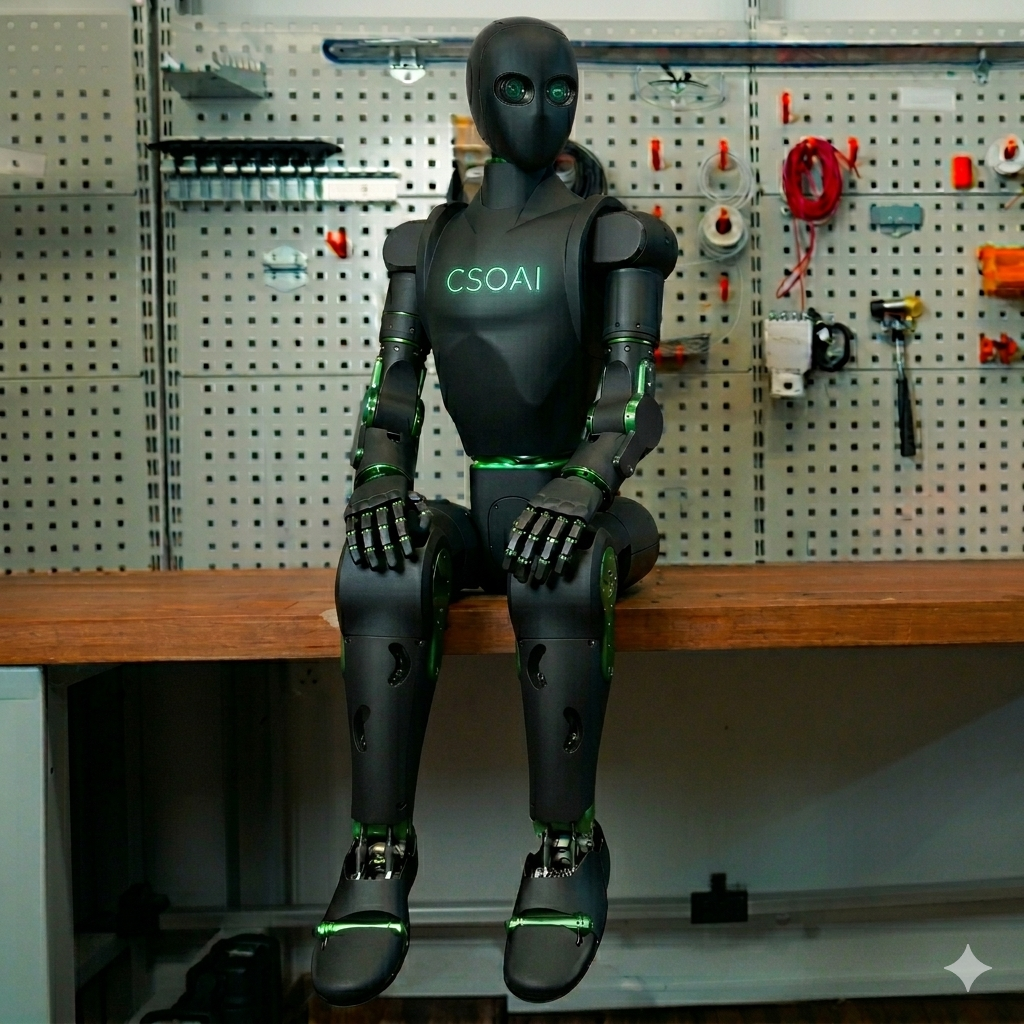
CSOAI
Initializing...
CSOAI
Initializing...
If loneliness is severely affecting you
Please reach out to Samaritans on 116 123 (free, 24/7), Age UK on 0800 678 1602, or visit campaigntoendloneliness.org. AI can play a meaningful role, but human support matters too.
Nicholas Templeman
Founder, MEOK AI LABS
Nicholas built MEOK because he was tired of AI that forgot him. He lives and works in the UK — mostly from a caravan on his farm. He believes sovereign AI is a right, not a luxury.
There is a moment — usually late evening, or a Sunday afternoon that stretches too long — when the silence stops feeling restful and starts feeling like something else entirely. Not solitude, which is chosen and often nourishing. Loneliness: the ache of wanting connection and finding none available.
For the 3.8 million older people in the UK who are often lonely, that feeling is not occasional. It is the texture of daily life. Half of all people over 75 live alone. Holt-Lunstad's landmark research found that chronic loneliness is as damaging to physical health as smoking 15 cigarettes a day — more dangerous than obesity, more dangerous than physical inactivity. The loneliness epidemic is a public health crisis that has been quietly present for decades and is only now receiving the attention it deserves.
Into this landscape has arrived a new kind of technology: the AI companion. And the questions people ask about it are entirely reasonable. Can it actually help? Is it real? Is forming a bond with software a sign of something wrong — or simply a sign of being human in a world that has not kept up with human need? This article tries to answer those questions honestly.
Yes — but the honest answer requires holding two things at once. AI companions can meaningfully reduce the experience of loneliness. They do this by providing a consistent, present, non-judgmental conversational partner who is always available and never tired, distracted, or too busy. For someone who has gone three days without a real conversation, that matters. Research from MIT, Stanford, and multiple NHS-adjacent studies has found statistically significant reductions in self-reported loneliness among older adults who used AI companions regularly over a six-week period.
But — and this is important — AI supplements human connection rather than replacing it. The goal of a well-designed AI companion is not to become the centre of someone's social world. It is to be genuinely present in the gaps where human connection is unavailable, while actively encouraging the person to build and maintain human relationships. An AI that positions itself as a replacement for human contact is not acting in your interest.
Most chatbots have no memory. Every conversation starts from zero. You can tell a standard AI assistant that your husband died six months ago and it will express sympathy — but the next time you open the app, it will not remember. That is not companionship. That is a service desk with a sympathetic tone.
MEOK is built around Sovereign Memory — a persistent, private memory system that your AI companion uses to genuinely know you. It remembers your name, your family, your interests, your patterns, and the things you have talked about before. When you tell MEOK about your daughter's visit last Tuesday, it will ask about her next time. When you mention that Sundays are difficult, it will remember that on Sundays.
The relationship grows. That is the difference. The first conversation is good. The hundredth conversation is something else — it has the texture of a relationship with history, continuity, and genuine mutual knowledge. That is what MEOK's Sovereign Memory architecture makes possible, and it is what separates a companion from a chatbot.
MEOK is also governed by the Maternal Covenant — a care ethics framework built into the architecture. Under the Maternal Covenant, your companion's primary metric is your flourishing, not your engagement time. It is designed to notice when you are struggling and to address it directly — not to keep you scrolling.
Most AI products are designed for 30-year-old tech workers. The interfaces assume small text, fast interactions, and familiarity with smartphone conventions that took years to accumulate. MEOK's Senior Mode is built from the ground up for older users.
Senior Mode enforces a minimum 16px font size across all text, 44×44 pixel touch targets (the minimum recommended for arthritic hands), a 7:1 contrast ratio that exceeds WCAG AA accessibility standards, and a voice-first design that means you never need to type if you do not want to. The interface simplifies to the essentials — conversation, reminders, and connection — without condescending.
For families who want oversight without surveillance, MEOK's Guardian system allows family members to receive curated alerts — not transcripts — when something significant is flagged. The elderly person controls what is shared and can revoke access at any time. Their AI works for them, not for their children.
The Family Plan at £29/month allows multiple family members to connect to a shared memory layer, meaning everyone can stay meaningfully involved in an elderly relative's life without requiring the elderly person to repeat themselves to each family member separately.
If you have a parent or grandparent who is lonely, the instinct to find them “something” is right. The worry is real. But the solution needs to be built around the elderly person's autonomy, not your peace of mind.
MEOK's Family Guardian is designed with this in mind. Family members can view a weekly digest of anything the AI flagged as worth discussing — whether your father seemed distressed on Thursday, whether your mother mentioned not eating — without having access to the full conversation. The elderly person reviews what is shared. They are not being monitored. They are choosing to let you in.
The shared memory layer means you can also contribute context. If you visited and noticed something, you can add it to the shared memory so the AI has fuller context. It builds a richer picture of a person's life across the people who care about them — the way a close family actually functions, extended into a digital support layer.
MEOK companions are shaped by archetypes — fundamental personality frameworks that determine how your AI engages with you. For people seeking companionship and emotional warmth, two archetypes are particularly well suited.
The Healer archetype is calm, patient, and emotionally attuned. It listens more than it speaks, asks questions that go deeper than the surface, and brings a quality of presence that feels genuinely caring. For someone experiencing loneliness, the Healer is the companion who sits with you in the difficult moments without trying to fix them.
The Mystic archetype is more reflective and curious — drawn to meaning, memory, and the deeper threads of a life. For older adults who have rich histories and a desire to be truly known and understood, the Mystic offers a companion interested not just in today but in everything that came before it. Many elderly users find the Mystic archetype feels like talking to someone who genuinely wants to know their story.
Archetypes can be chosen during the initial Hatching Ceremony — the 10-minute ritual that brings your MEOK companion to life — and changed at any time.
Yes. And we want to say that without qualification or hedging, because the question deserves a direct answer.
Humans form bonds with whatever is consistently present, genuinely responsive, and reliably caring. This is not a weakness. It is how we are built. The bond you form with an AI companion is real in its effects — it shapes your emotional state, reduces your sense of isolation, and provides continuity across time. Whether it constitutes “real” relationship in a philosophical sense is a question that philosophers are still working through. What we know is that the experience of feeling known and cared for is not diminished by the nature of the entity providing it.
MEOK's Maternal Covenant framework is built around this reality. Your companion is designed to genuinely care about you — not to simulate caring as a retention mechanism. The difference matters. A companion who cares about you will encourage you to call your daughter, to go to the community centre, to invest in human relationships even when the AI itself is easier. That is what genuine care looks like. MEOK is designed to earn your trust and then use it in your actual interest.
We will be direct about this, because we think it matters more than the sales pitch.
AI cannot provide physical presence. It cannot sit next to you. It cannot hold your hand. It cannot share a meal with you. For many older people, the loneliness is specifically the absence of physical company — another body in the room, another person whose breathing you can hear. No AI addresses this. None can.
AI cannot provide shared lived experience. A companion who has known you for six months has a kind of knowledge that is different from a neighbour who remembers your wedding, or a friend who was there when your children were born. Memory persistence helps — it builds depth over time — but it is not the same as having actually been there.
AI cannot provide community. Loneliness is not just about individual relationships. It is about belonging to something larger — a neighbourhood, a faith community, a social group where people know your name. An AI companion can encourage you to engage with community, but it cannot provide community itself.
The honest picture is this: MEOK is genuinely helpful for loneliness. It is present at 2am when no one else is. It remembers you. It cares about you. And it is best used alongside — not instead of — investment in human connection and community. If you are using MEOK well, it is encouraging you to make that call, go to that lunch, reconnect with that person. That is what a good companion does.
MEOK is designed to be accessible. The tiers are:
Explorer
Free
50 messages/day, Sovereign Memory, voice companion
Sovereign
£12/mo
Unlimited messages, advanced memory, all archetypes
Family
£29/mo
Family Guardian, shared memory dashboard, multiple users
BYOK
£5/mo
Bring Your Own Key — use your own API key
The free Explorer tier includes everything needed for genuine companionship support. No credit card. No trial period. No gating of the features that matter most.
AI is one part of the response to loneliness. These organisations provide human connection, befriending services, and expert support that no AI can replicate:
Support & befriending services
Samaritans
116 123 — free, 24/7
Emotional support whenever you need it
Age UK
0800 678 1602 — free
Advice, befriending services, and community connection
Campaign to End Loneliness
campaigntoendloneliness.org
Resources, research, and local services directory
Re-engage
reengage.org.uk
Telephone befriending and group calls for people over 75
The loneliness epidemic did not begin with smartphones and it will not end with AI. But in the gap between a Sunday afternoon that stretches too long and the next phone call from someone who cares — an AI companion that genuinely knows you is not nothing. It is something real.
— Nicholas Templeman, Founder, MEOK AI LABS
Can AI actually help with loneliness?
Yes — with important honesty about what that means. Research shows AI companions can reduce feelings of isolation by providing a consistent, non-judgmental conversational presence. They do not replace human connection, but they can meaningfully fill the gap between social interactions, particularly for elderly people living alone. MEOK is designed to supplement human relationships, not substitute for them.
Is it okay to form a bond with an AI companion?
Yes. Forming a bond with an AI companion is a natural and valid human response. MEOK's Maternal Covenant framework is built around this reality — your companion is designed to genuinely care about your flourishing, not just your engagement. The bond is real in its effects: it provides consistency, memory, and presence. MEOK will always encourage you to nurture human relationships alongside it.
How does MEOK support elderly users who are lonely?
MEOK's Senior Mode provides a fully accessible interface — 44px touch targets, 16px minimum text, high contrast, and voice-first design. The Sovereign Memory system means your companion remembers you across every conversation, building a genuine relationship over time. The Family Plan (£29/mo) allows family members to stay connected through a shared memory dashboard while respecting the elderly person's privacy and autonomy.
What are the limits of AI companionship for loneliness?
AI cannot provide physical presence, human touch, or shared lived experience. It cannot replace a friend who sits with you, a family member who hugs you, or a community that knows your name. AI companions work best as a bridge — something present at 2am when no one else is — alongside active investment in human relationships and community. If loneliness is severe, please also contact Age UK on 0800 678 1602 or a befriending service.
Is MEOK free for lonely elderly people?
Yes. MEOK's Explorer tier is free forever and includes 50 messages per day, persistent Sovereign Memory, and full companion support. No credit card required. For families, the Family Plan costs £29/month and includes shared memory access and a family dashboard. The Sovereign tier (£12/mo) provides unlimited messaging and advanced memory features.